
Last updated November 23, 2026
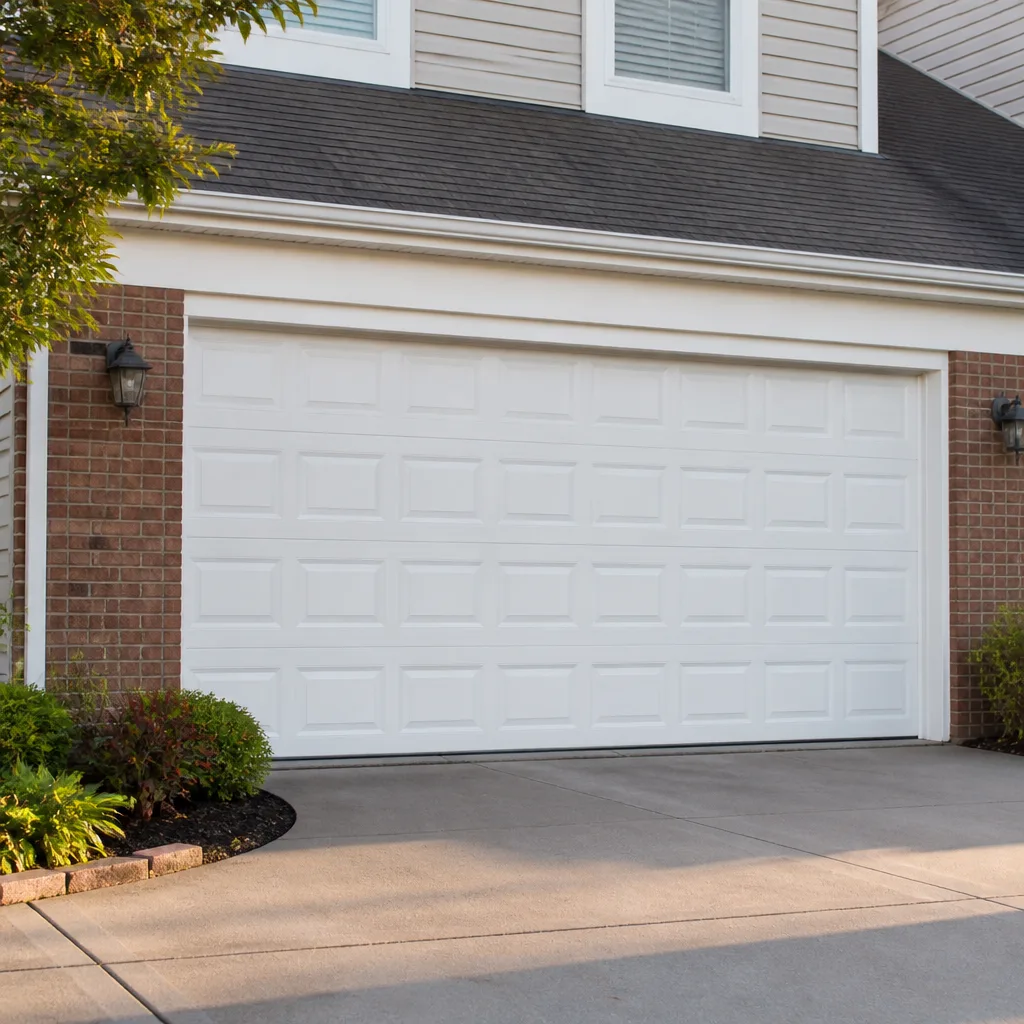 Raised-panel steel
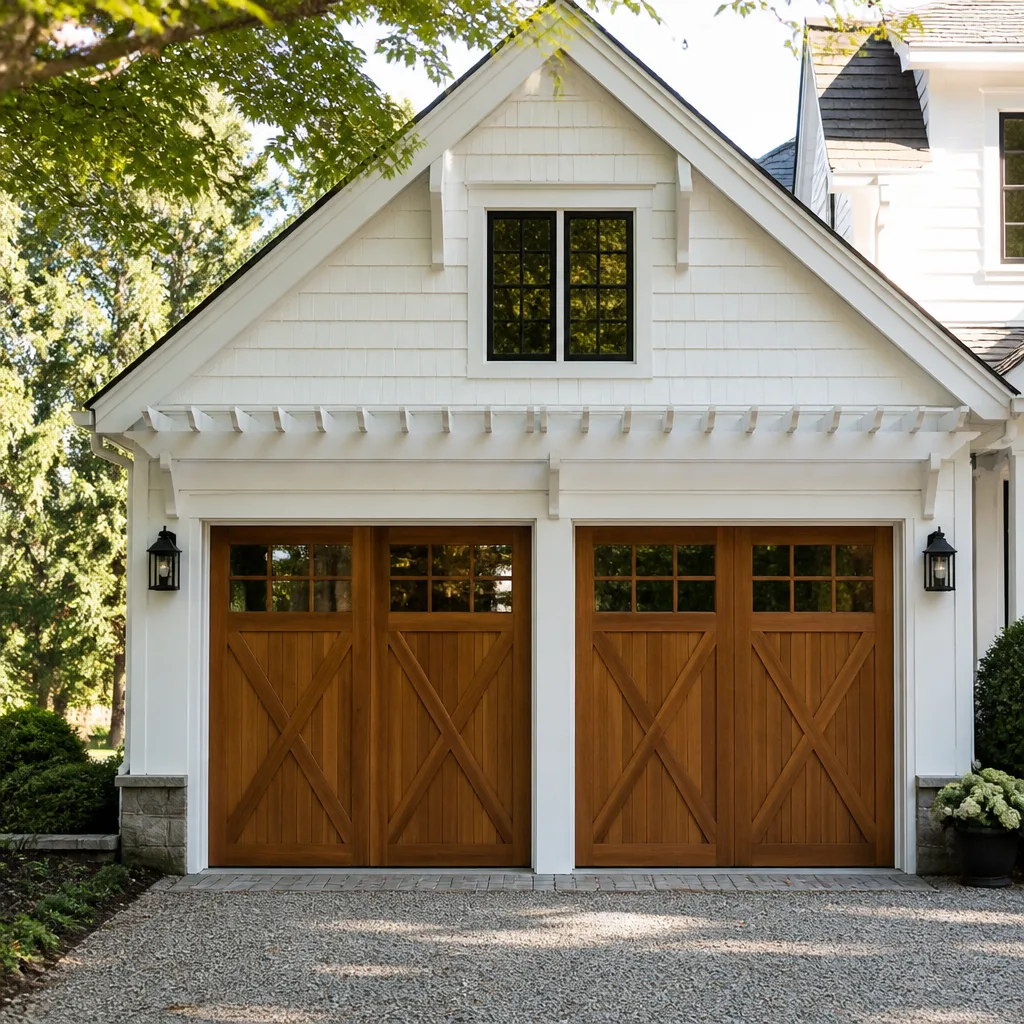 Carriage house
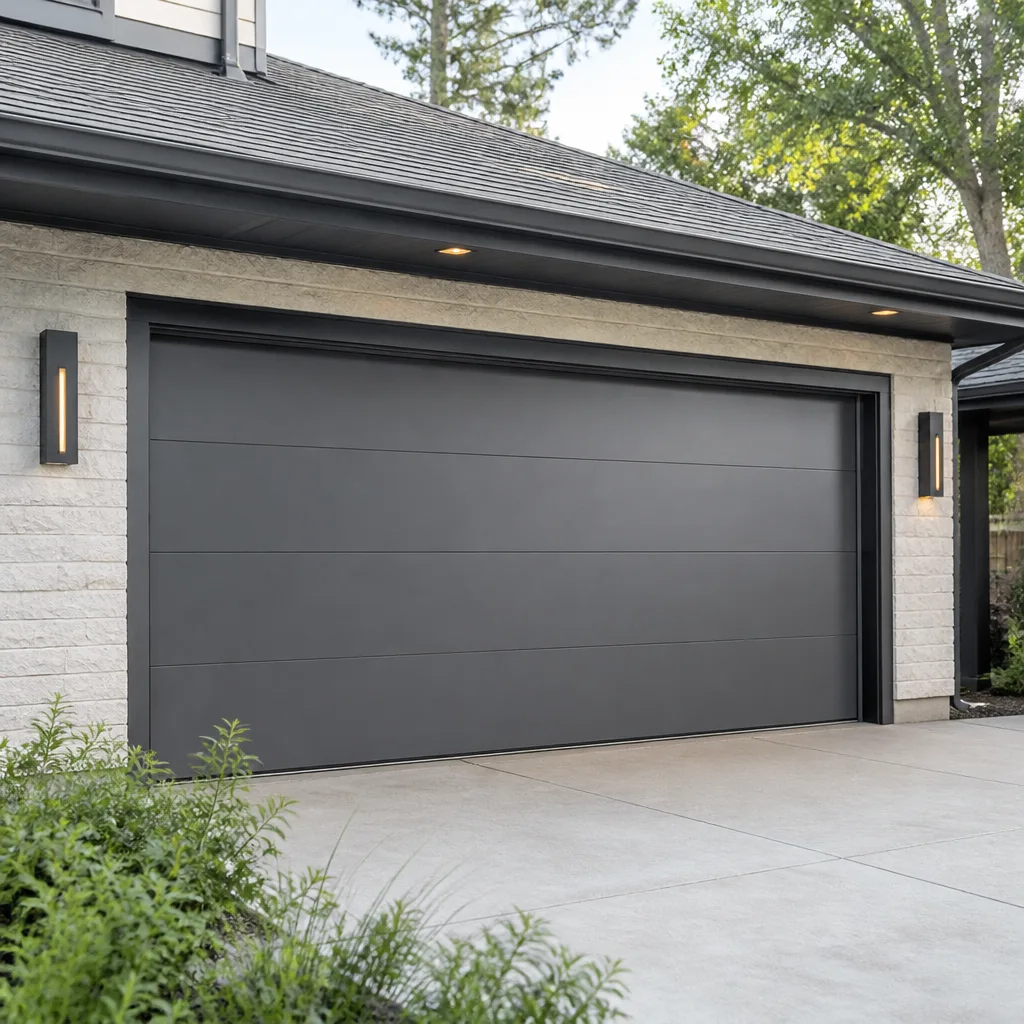 Modern flush
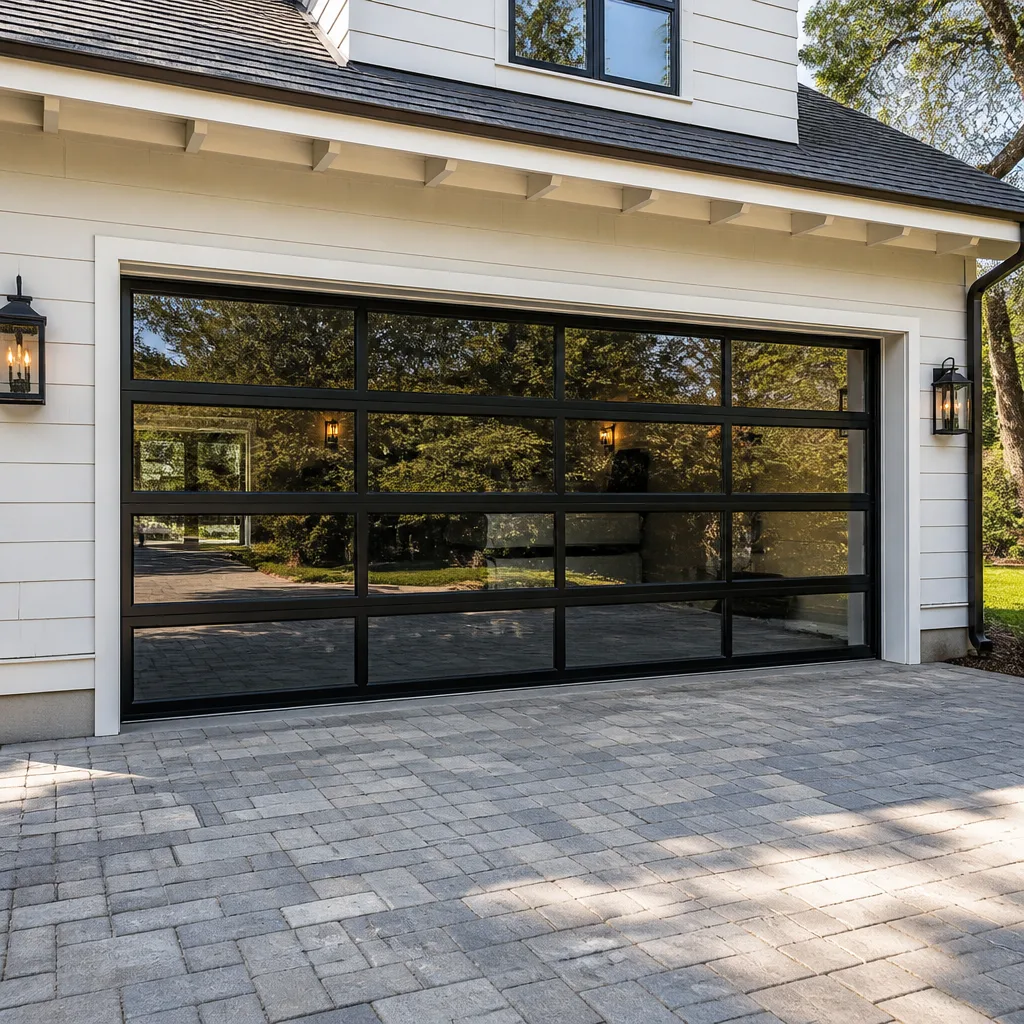 Full-view glass
 LiftMaster openers
 Chamberlain openers
Full 25-point door and opener safety check with every visit - springs, cables, rollers, tracks, and your LiftMaster or Chamberlain opener included
You get a price before we start. It does not change when the pro arrives.
Get your free estimateGarage Door Permits, Codes & Inspections in Milford, MA: What You Need to Know
Most homeowners assume a permit is bureaucratic overkill for a garage door swap. The thinking goes: the door looks the same, it goes up and down the same way, so why involve the building department? But in Massachusetts, the line between a repair and a replacement matters more than the finished look. When a job changes the structural opening or the door’s role as a fire barrier, local code treats it very differently than a simple panel swap. Confusing the two is a common and costly mistake. This guide explains when Milford requires a permit for garage door work, when it doesn’t, how the inspection actually goes, and what to do if you inherit unpermitted work before a sale.
Quick Answer
In Milford, MA, a garage door replacement that changes the structural opening, header, or track dimensions typically requires a building permit and inspection, while a like-for-like panel, spring, or opener swap usually does not. Doors on an attached garage shared with living space may also need to meet fire-rated requirements, which is a separate code concern. When in doubt, ask the Milford building department before work starts.
Styles & brands we work with
- Raised-panel steel
- Carriage house
- Modern flush
- Full-view glass
- LiftMaster openers
- Chamberlain openers
Table of Contents
- Repair vs. Replacement: Where Milford Draws the Line
- When You Actually Need a Permit in Milford
- Fire-Rated Doors and Attached Garages
- How the Inspection Process Works in Practice
- The Homeowner’s Insurance Angle
- Inheriting Unpermitted Garage Door Work
- How Milford’s Climate Affects Your Door Over Time
- Permits, Records, and Resale
Repair vs. Replacement: Where Milford Draws the Line
The single question that determines whether you need a permit is not “did the door change?” It’s “did the structural opening, header, or track mounting change?” That’s the threshold code inspectors look at, and it’s the one that trips up homeowners who assume a new door equals a new permit every time.
Here’s the practical breakdown:
- Repairs (usually no permit): Replacing torsion or extension springs, swapping rollers, hinges, or cables, replacing a broken opener or remote, or replacing a damaged panel with a matching one. These are maintenance and restoration, not structural work.
- Replacement (permit often required): Installing a door in a larger opening, changing the width or height of the opening, modifying the header, relocating tracks, or installing a door where one didn’t exist.
- Judgment call (ask first): Swapping a full door in the exact same opening with the same dimensions. Some towns treat this as a repair; others want a permit because the door’s weight, spring system, and attachment change.
Milford has a lot of older housing stock, especially in the neighborhoods around downtown and toward the Hopedale line, where a “same size” replacement often requires adjusting the opening or the header to fit modern door dimensions. That adjustment is structural. It’s the moment a no-permit job becomes a permit job. If you’re not sure which category your project falls into, our team can walk you through garage door repair versus replacement before you commit to either path.
One more thing worth knowing: the door’s role as a fire barrier and the door’s structural opening are two separate code questions. A job can clear one and not the other.
When You Actually Need a Permit in Milford
You need a building permit in Milford when the garage door work involves structural changes to the opening, header, or framing, or when it changes the door’s fire separation role between an attached garage and living space. If you’re simply restoring the door to its original function, a permit is usually not required.
Here’s the short version of when to pull one:
- Structural opening changes. Widening, raising, or reframing a garage door opening requires a permit.
- Header or framing modifications. Any change to the header above the opening or the framing around it triggers a permit.
- New installation where no door existed. Converting a carport or walled opening into a garage door means a permit and inspection.
- Fire-rated door replacement. On an attached garage with a door into the living space, replacing the door assembly to preserve its rating can require a permit depending on scope.
When a permit isn’t typically needed:
- Spring replacement, opener replacement, roller and hinge swaps, cable replacement, and like-for-like panel replacement.
- Routine adjustments, lubrication, and safety sensor work.
The safest habit: before booking a full replacement, call the Milford building department and describe what you’re planning. The permit office will tell you whether your job needs a permit and what paperwork it wants. It takes five minutes and saves painful headaches down the line. For repair work, the answer is almost always “no permit,” which is one reason a fast repair route is often the better call – our garage door spring repair and opener work are both repair categories that rarely touch the permit question.
Fire-Rated Doors and Attached Garages
If your Milford home has an attached garage with a door that opens directly into the living space, that door is part of the home’s fire separation. In Massachusetts, that door assembly is expected to do real work: hold back fire and smoke long enough for occupants to get out. Replacing it with a standard door that doesn’t carry that rating can undermine the separation even when the door fits and closes perfectly.
Milford’s colonial-style homes are especially prone to this layout, since so many were built with a garage tucked under or beside the main structure and a single door into a mudroom or kitchen. It matters for two reasons:
- Code. Fire-rated door assemblies have specific requirements for the door, frame, hardware, and self-closing function. A permit and inspection would catch a mismatch.
- Insurance. If a fire spreads through the living-space door into the house, an insurer may examine whether the door met the required rating. A non-rated door in that spot can complicate a claim.
Not every attached garage uses a rated door. Some layouts put the fire separation in a wall instead of the door. The only way to know which applies to your house is to check the home’s plans or have the building department confirm. But if your attached garage opens straight into a hallway, kitchen, or mudroom, assume the door is doing fire separation work until someone tells you otherwise. Don’t assume the old door “looked like” the new one – look at the rating label on the door’s edge, not its finish.
How the Inspection Process Works in Practice
The inspection is what most homeowners dread, but it’s routine when the work is done to plan. In practice, a garage door permit inspection in Milford focuses on a short checklist, usually takes 20 to 40 minutes on site, and either passes or gets a follow-up list. Here’s what the inspector is actually looking at:
- The opening and header. That framing matches what was permitted: correct dimensions, correct header, correct reinforcement.
- Attachment and fastening. The track, spring system, and operator are mounted to framing, not just drywall or cladding.
- Door operation and balance. The door opens and closes cleanly, sits level, and holds position when released halfway.
- Safety features. On an opener, that means the photo-eye sensors and the auto-reverse pressure setting are functioning.
- Fire separation (where required). If the door belongs on a fire separation, the inspector wants to see the rated assembly in place, self-closing, and correctly labeled.
What fails most often? Small things, not doors falling off: unbalanced doors that drift when released mid-travel, sensors installed out of alignment or higher than the door bottom, fasteners that don’t bite into solid framing, and fire doors swapped for non-rated equivalents. Those are usually corrected and re-inspected without drama. What causes real trouble is skipping the inspection entirely or doing work outside the permitted scope – changing the opening size during a “same-size” install, for example.
If you’re coordinating a full replacement, ask whoever installs your door to sequence the inspection correctly. Our service pages lay out how we split repair visits from replacement visits so the permit process doesn’t stall.
The Homeowner’s Insurance Angle
Unpermitted garage door work affects insurance in one specific way: it gives your insurer a legitimate question to ask when a claim lands. Policies generally expect the home to have been maintained and improved in line with code. If a door fails and causes injury or property damage, and the claim adjuster finds the door was installed outside code or without a required permit, the claim can be reduced or denied depending on what the policy says and what the investigation finds.
The not-so-obvious part is that the claim doesn’t need to be huge. A few scenarios where the permit question surfaces:
- A spring failure that damages a vehicle in the garage; the adjuster looks at who did the work and when.
- A fire that spreads from the garage into the house through a door that wasn’t the rated assembly it should have been.
- A door that falls off its tracks and injures someone – a homeowner liability claim where the door’s installation history becomes evidence.
None of those are catastrophes on their own. Together, they’re the reason to keep paperwork. If your door replacement required a permit, keep the signed-off inspection card with your home paperwork. If it didn’t require a permit, keep the contract and the manufacturer spec. Both prove the work was done properly, which is exactly what an adjuster will ask for. Insurance companies aren’t looking for reasons to deny claims – they’re looking for a paper trail that shows the work was done correctly. Give them one.
Inheriting Unpermitted Garage Door Work
You bought the house. The door looks fine. Then you go to sell, and a buyer’s inspector discovers the garage door opening was modified without a permit. What are your options? In most cases, you can regularize the work retroactively, but the path depends on what was actually done.
Here’s how to handle it before you sell:
- Find out what was changed. Ask the building department for the permit history on your address and compare it to what’s on the door. If the door opening was resized, reframed, or a fire door was replaced, that’s the question to sort out.
- Get an inspection of the current work. Many municipalities will inspect existing work and issue a permit retroactively if the work meets current code. If it doesn’t, you’ll know what needs correcting.
- Fix the noncompliant part. This may be as small as replacing a non-rated door with a rated one, or as large as redoing a resized opening. Our team can assess the door and give you a written price for correcting what’s wrong.
- Document the outcome. Keep the permit card, inspection report, or manufacturer spec for the door. That’s what a buyer’s attorney and the buyer’s lender want to see.
Milford buyers and their agents are looking for clean paperwork on older homes, and unpermitted structural work on a garage door opening is exactly the sort of issue that stalls a closing. If you’re selling and the door was previously changed, resolve it early rather than let it surface at inspection. If you’d rather just replace the door cleanly with fresh paperwork, our garage door repair team can scope that for you.
How Milford’s Climate Affects Your Door Over Time
Milford sits in central Massachusetts, which means real freeze-thaw cycles, humid summers, and enough snow and ice to work a garage door hard. That has direct consequences for both your door and your permit decision.
- Freeze-thaw stress on hardware. Rollers, hinges, and spring drums take repeated load cycling through cold snaps. A door balanced in October can feel stiff in February. That’s not a permit issue, but it does mean scheduled maintenance matters more than it would in a milder climate.
- Ice and snow load on the door’s bottom seal. Water that gets behind a worn seal freezes and can bow the bottom section. A like-for-like panel replacement, no permit needed – but if you decide to raise the opening to get the door above the snow line, that’s structural.
- Seasonal wood movement on older doors. Many older Milford homes still have wood garage doors that swell and rack with humidity changes. If the door has racked and the opening has shifted with it, an inspection may find more than a repair.
- Spring life. Springs cycle hundreds of times a year, and cold weather takes a toll. This is why spring failure is the most common garage door repair we see in the area. It’s also the most dangerous repair in the trade – the springs hold serious stored energy, and a snapped torsion spring can cause injury in an instant. This isn’t a job for a homeowner with a hardware store toolkit. Call a pro.
The climate doesn’t change your permit question by itself, but it does mean more doors in Milford end up needing replacement before their time – and each of those replacements is where the permit decision lands.
Permits, Records, and Resale
Permits are also a resale issue. When a buyer’s inspector, lender, or attorney looks into a home’s history, an unpermitted structural change on the garage door opening is a red flag they’ll want resolved before closing. A clean permit history – or a documented repair history – moves the deal forward.
A few things worth keeping:
- The signed-off permit card from the building department, if one was issued.
- The manufacturer spec sheet or label from your door, especially any fire rating.
- Your installer’s written contract and itemized quote.
- Any inspection reports or follow-up documentation.
None of this is exciting, but it’s what makes a future sale smoother. If you’re planning a replacement in Milford and want to know whether a permit applies before you sign a contract, our team can tell you what to expect and what the door itself needs. Pulling a permit and passing inspection isn’t the hard part – the hard part is realizing late that it was required.
Common Mistakes to Avoid
- Assuming a “same size” door doesn’t need a permit. If the header or opening has to be adjusted to fit the new door’s dimensions – common on older Milford homes – that’s structural work and usually needs a permit.
- Replacing a fire-rated door with a non-rated one. If your attached garage opens into living space, the door is likely on the fire separation. A non-rated replacement can complicate insurance and code compliance.
- Skipping the inspection because the door “looks fine.” The inspector checks balance, sensor height, and fastener bite into solid framing – things you can’t confirm by standing in the driveway.
- Letting a handyman change the opening. A generalist may not know what triggers a permit or how to sequence the inspection. A garage door specialist should.
- Not keeping the paperwork. The permit card, contract, and door spec are what you’ll need at resale or if you ever file an insurance claim.
- Ignoring signs of a previously altered opening. Mismatched trim, a header that doesn’t match the rest of the wall, or a door that never quite sealed are signs a past job may have gone unpermitted.
- DIY spring work. Springs are not a permit question – they’re a safety question. Torsion and extension springs store enough energy to cause serious injury. Leave them to a trained technician.
See the difference
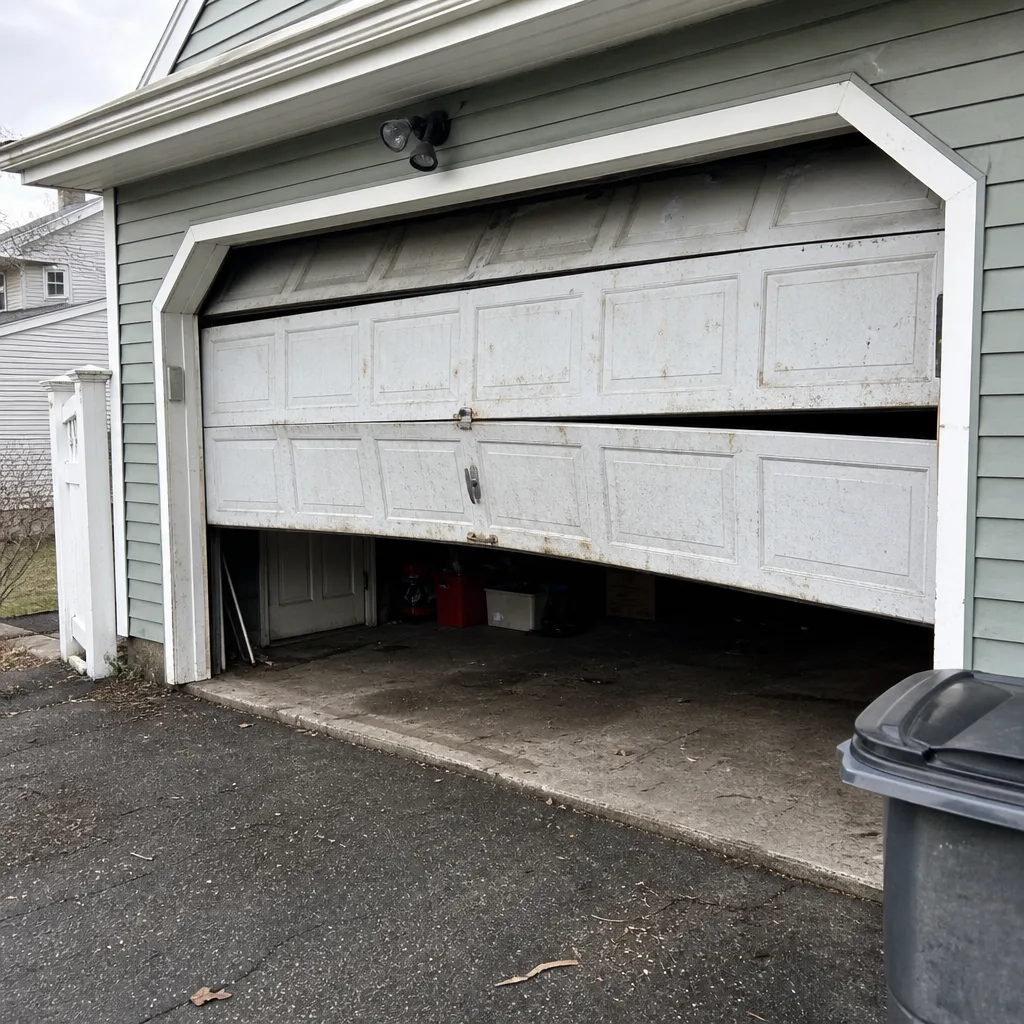 Before
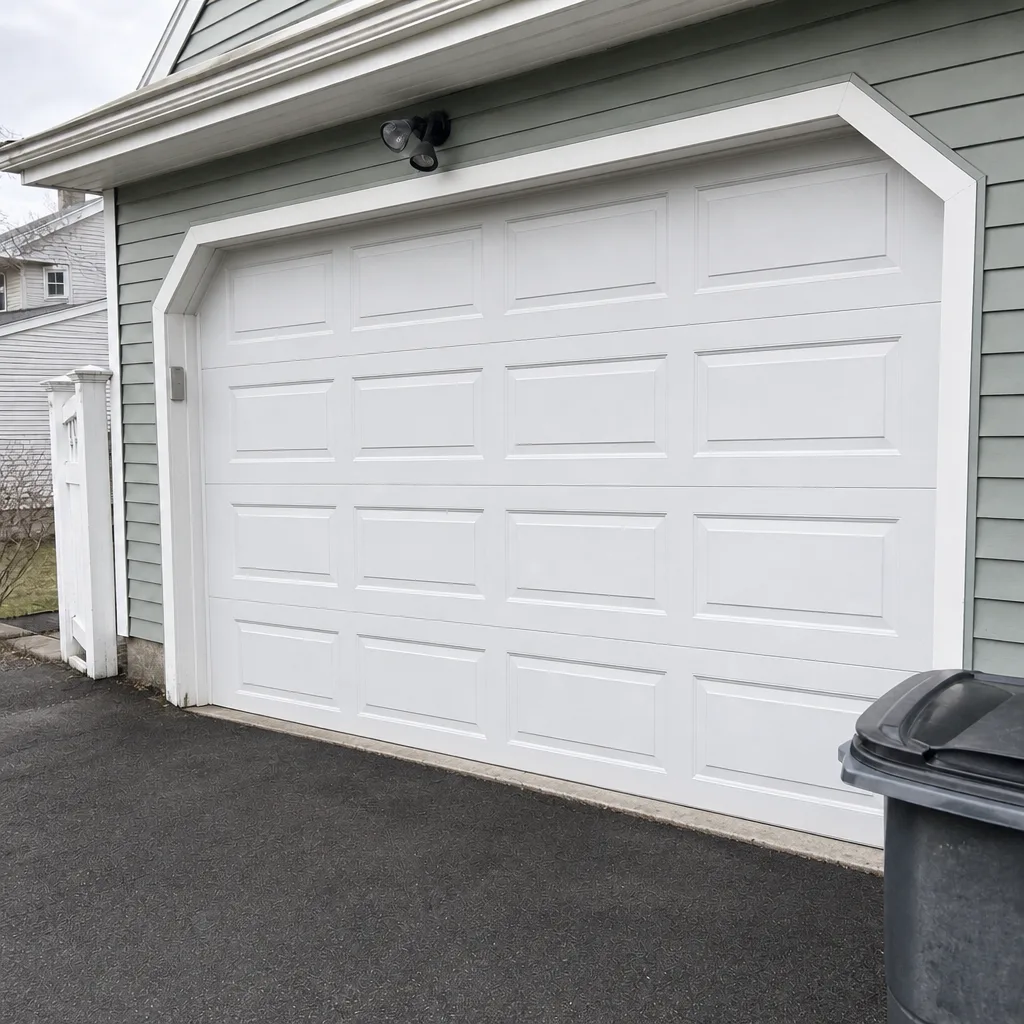 After
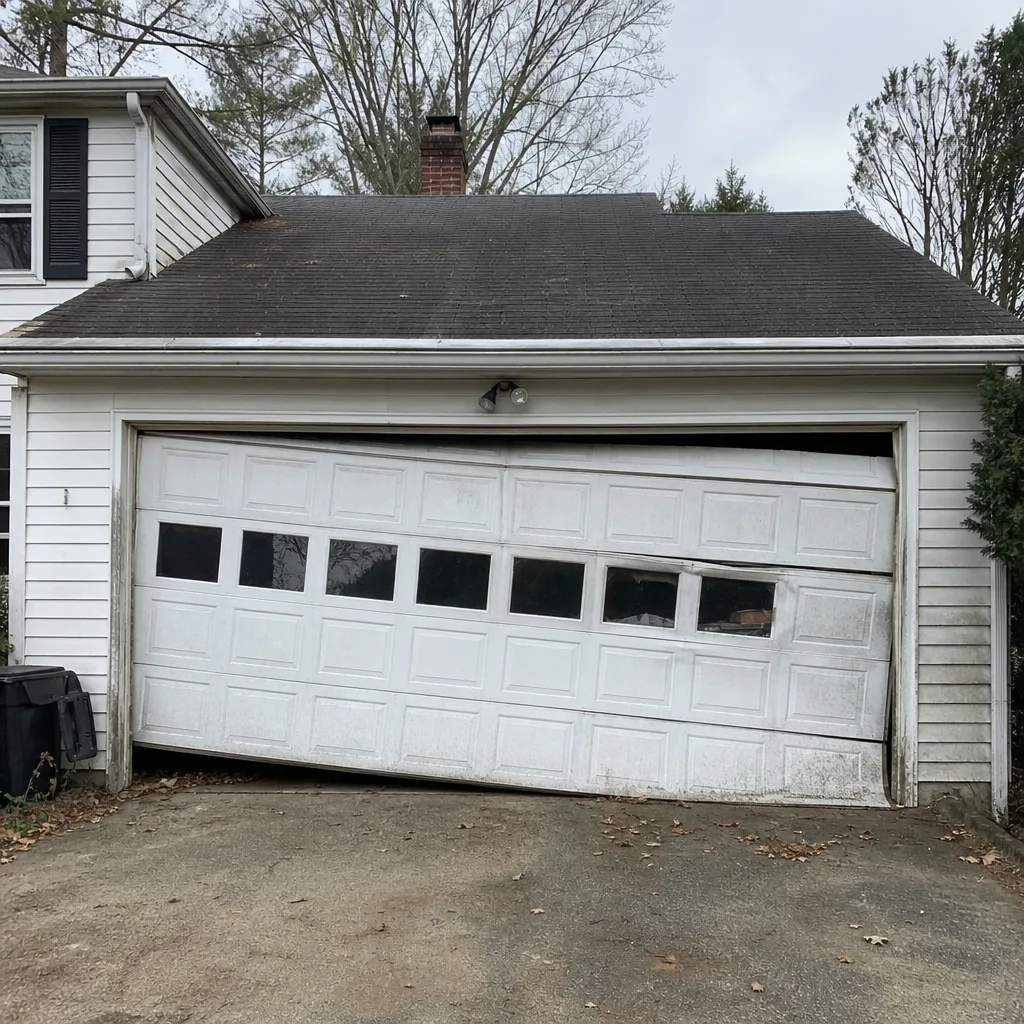 Before
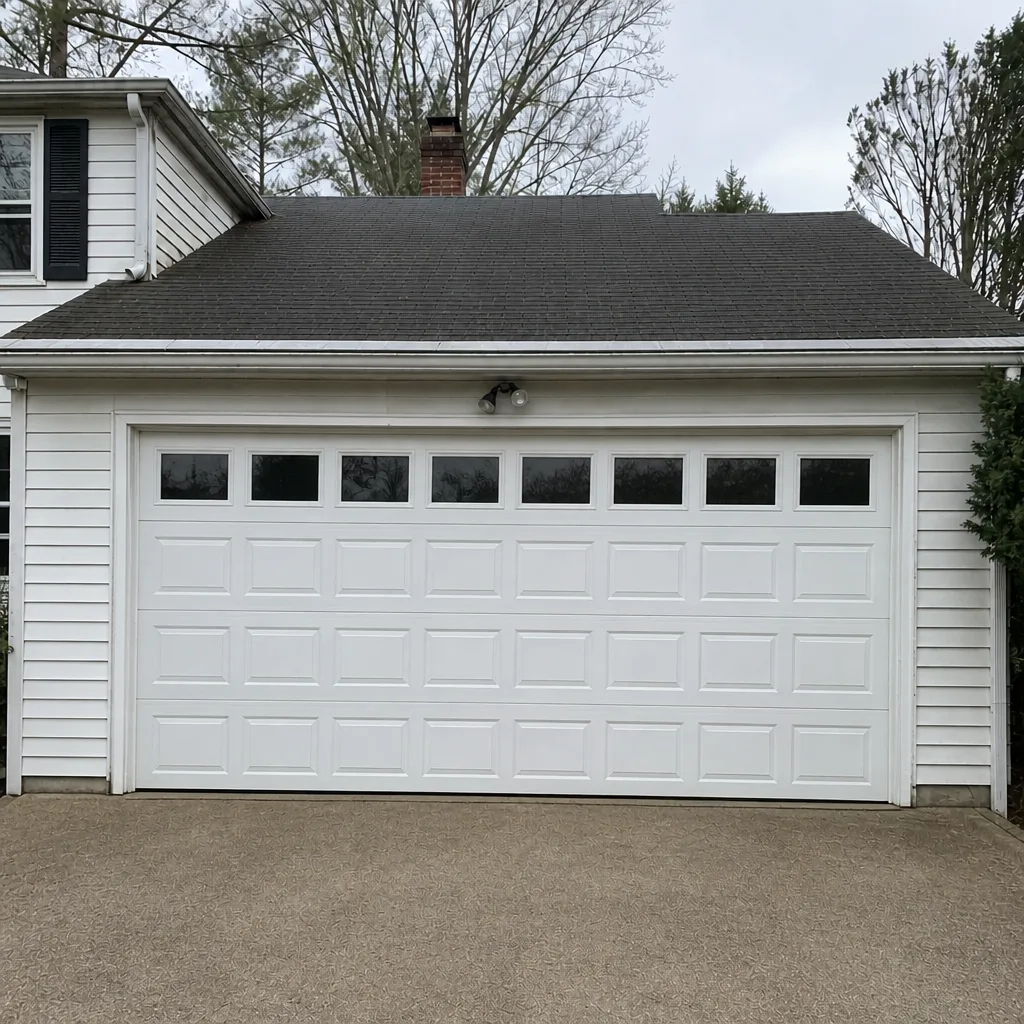 After
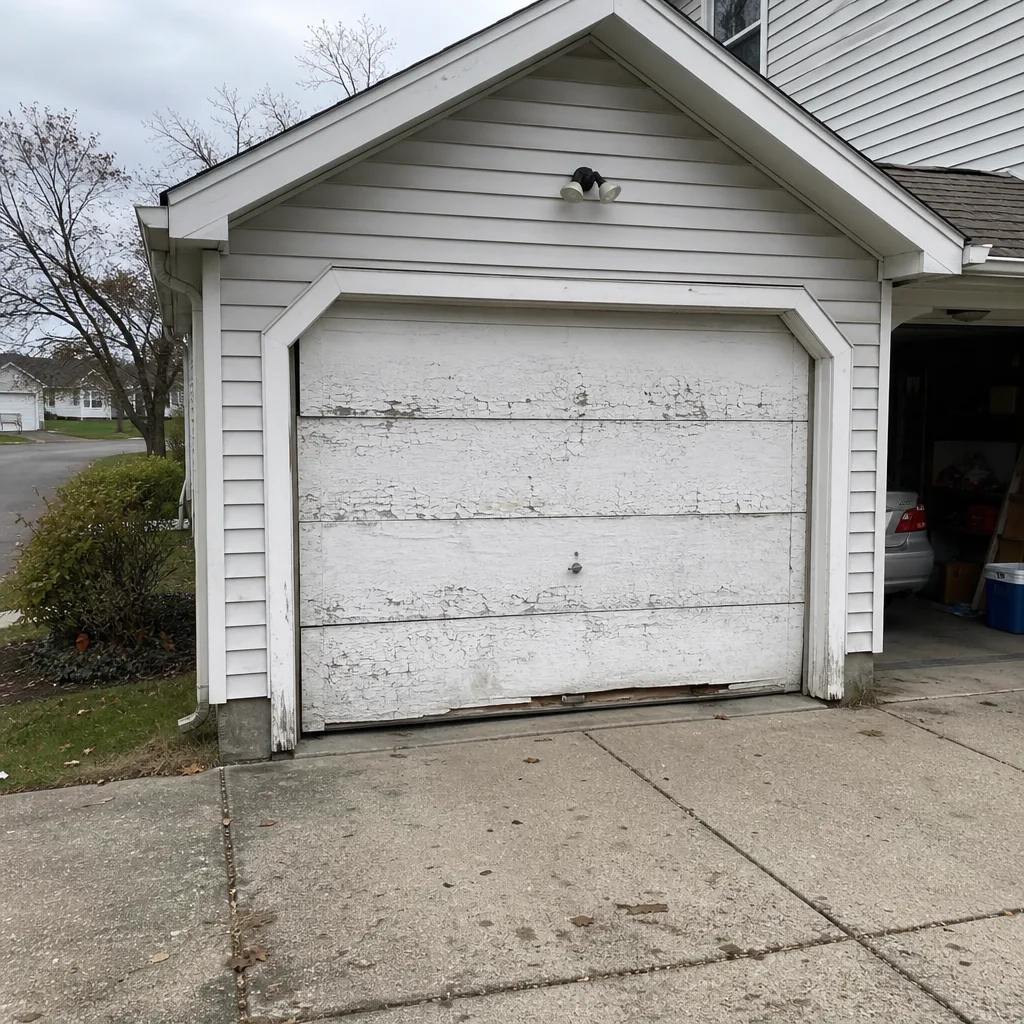 Before
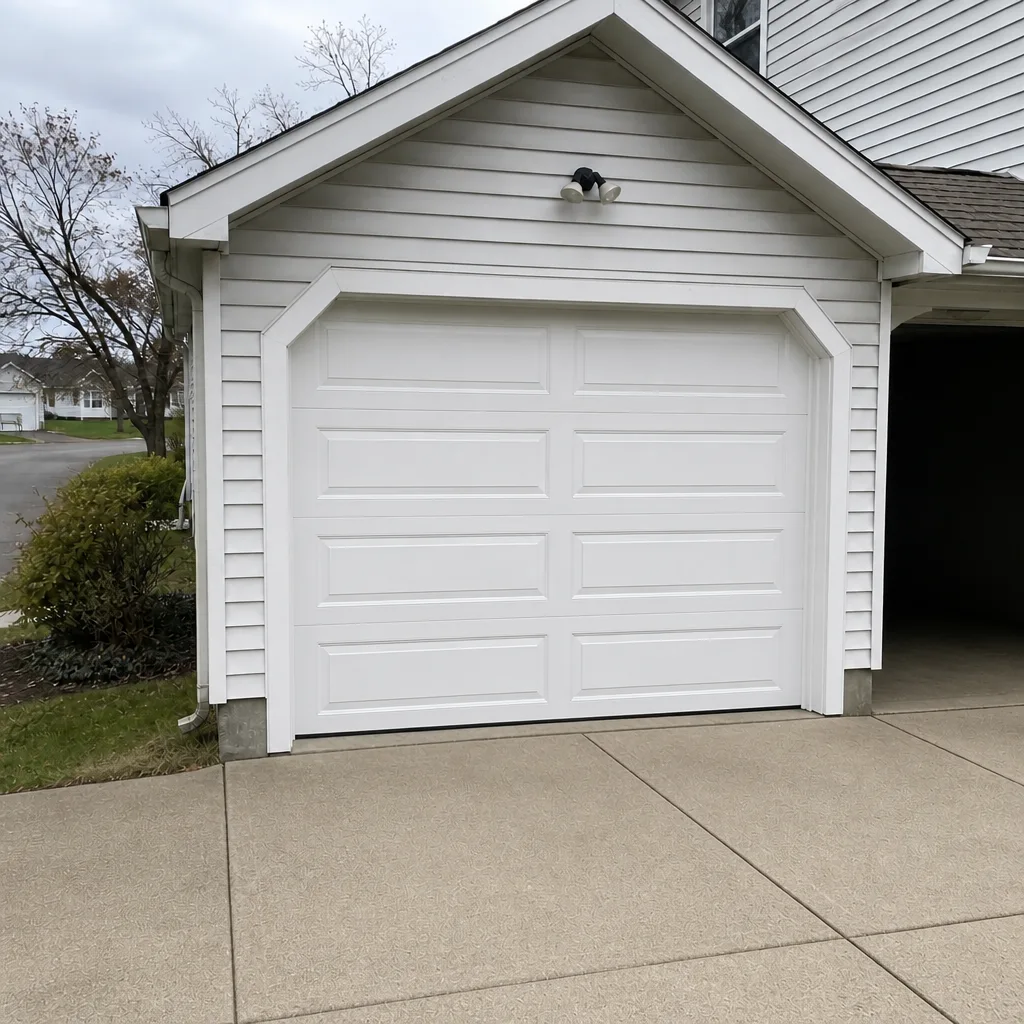 After
When to Call a Professional
You should call a garage door specialist when the door fails to balance, when an opener stops responding, when a spring snaps, when you’re considering a full replacement, or when you’ve discovered unpermitted work from a previous owner. Repairs should be done by someone who works on your specific brand – we handle LiftMaster, Chamberlain, Genie, Clopay, Amarr, Wayne Dalton, Craftsman, and Raynor systems, so we’re not steering you toward a brand for our convenience. Our technicians have up to 9 years of experience in this trade. We answer 24/7 – call (866) 937-8812 and we’ll book fast dispatch from 7am to 7pm, Sunday through Friday. Garage Door Repair Milford Pros offers free estimates in Milford, and the written quote sets the final price before any work starts.
Frequently Asked Questions
It depends on whether the job changes the structural opening. A like-for-like replacement in the same opening usually doesn’t require a permit, but a replacement that changes the opening size, header, or framing typically does. Fire-rated doors on attached garages may also require a permit. Call the Milford building department to confirm for your specific job, and call (866) 937-8812 for a free estimate on the door work itself.
No, replacing a garage door opener is a repair, not a structural change, and doesn’t require a permit in Milford. We handle garage door opener repair for all the major brands and can usually get an opener back up the same day. Call (866) 937-8812 for an exact quote – estimates are free.
In most cases, you can regularize the work retroactively. The building department can inspect existing work and issue a permit if it meets current code; if not, you’ll need to correct what’s wrong before you sell. Resolving it early avoids stalling a closing. Call (866) 937-8812 and we’ll assess the door and give you a written price for anything that needs correcting.
It can if you file a claim. Insurers expect the home to meet code, and if a door fails and causes injury or property damage, the adjuster may investigate whether the work was permitted and code-compliant. The safest approach is to keep the permit card, contract, and door spec. Call (866) 937-8812 for a free estimate on correcting unpermitted work.
Usually 20 to 40 minutes on site. The inspector checks the opening and header, attachment to framing, door balance, safety sensors, and fire separation where required. If something fails, it’s typically a correction and re-inspection rather than a restart. Call (866) 937-8812 for a free estimate before you book the install.
Yes. We work with the flow of a Milford replacement – from measuring the opening to the written quote to the door install – and we can tell you what to expect from the permit side before you commit. The price is set per job by the written estimate, agreed before any work starts. Call (866) 937-8812 – estimates are free.
The Bottom Line
The permit question on a Milford garage door comes down to one thing: did the job change the structural opening or the door’s fire separation role? If yes, pull a permit and get it inspected. If no, a repair is a repair – no paperwork needed. Keep the documents either way, because that’s what you’ll hand to an insurer or a buyer down the line. And for anything involving springs, openers, or a full replacement, call a specialist. We answer 24/7 at (866) 937-8812 with fast dispatch from 7am to 7pm, Sunday through Friday, and free estimates on every job.
Written by the team at Garage Door Repair Milford Pros.